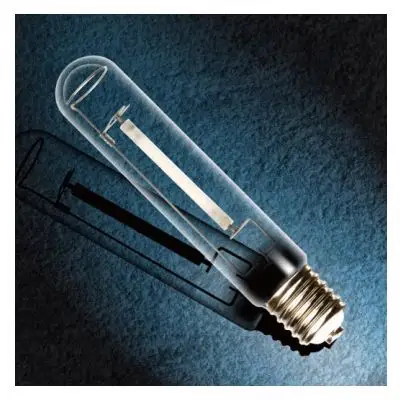
High Pressure Sodium Lamp
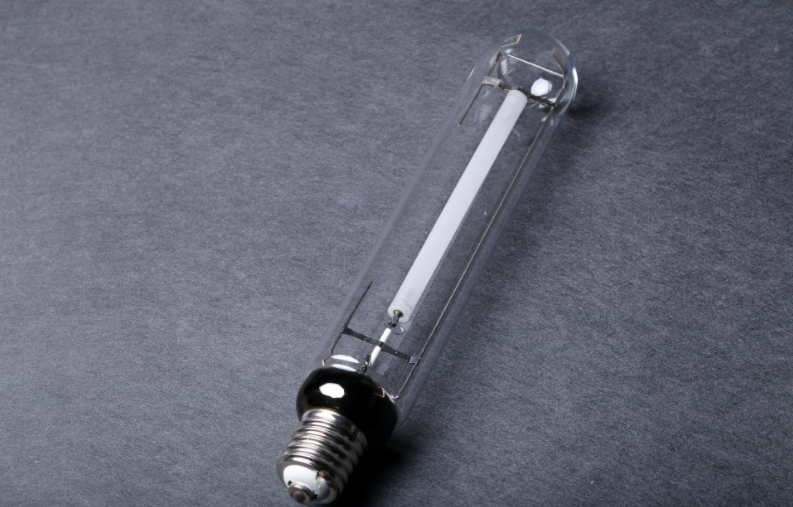
The high - pressure sodium (HPS) lamp is a type of high - intensity discharge (HID) lamp. It consists of several key components. At the center is an arc tube, which is usually made of a translucent ceramic material like alumina. This arc tube contains a small amount of metallic sodium, mercury, and a noble gas such as xenon. The outer envelope, which surrounds the arc tube, is typically made of hard glass. It serves to protect the arc tube and also contains a vacuum or an inert gas to provide thermal insulation and prevent chemical reactions.
The high - pressure sodium (HPS) lamp is a type of high - intensity discharge (HID) lamp. It consists of several key components. At the center is an arc tube, which is usually made of a translucent ceramic material like alumina. This arc tube contains a small amount of metallic sodium, mercury, and a noble gas such as xenon. The outer envelope, which surrounds the arc tube, is typically made of hard glass. It serves to protect the arc tube and also contains a vacuum or an inert gas to provide thermal insulation and prevent chemical reactions.
The electrodes are located at each end of the arc tube. These electrodes are made of a refractory material such as tungsten and are designed to withstand the high temperatures and chemical environment inside the arc tube. The electrical connections are made through the base of the lamp, which is designed to fit into a standard socket.
When the lamp is first turned on, a high voltage is applied across the electrodes. The noble gas (usually xenon) in the arc tube is ionized first due to its lower ionization energy. This creates a conductive path and allows a current to flow through the arc tube. As the current passes through, the heat generated causes the mercury to vaporize. The mercury vapor then becomes ionized and conducts electricity more efficiently.
The increasing temperature and electrical energy cause the sodium in the arc tube to vaporize as well. The sodium atoms are excited by the electrical discharge. When these excited sodium atoms return to their ground state, they emit photons of light. The characteristic yellow - orange glow of the high - pressure sodium lamp is due to the emission spectrum of sodium. The high pressure inside the arc tube causes the spectral lines to broaden, resulting in a more continuous and efficient light output compared to low - pressure sodium lamps.
Luminous Efficacy: High - pressure sodium lamps have relatively high luminous efficacy. They can produce a significant amount of light output for the power they consume. For example, a typical 400 - watt HPS lamp can have a luminous flux of around 48,000 - 56,000 lumens. This makes them energy - efficient for applications where a large amount of light is needed, such as street lighting and industrial area lighting.
Color Temperature and Color Rendering: The color temperature of high - pressure sodium lamps is relatively low, usually around 2000 - 2200K. This gives the light a warm, yellow - orange hue. The color rendering index (CRI) of HPS lamps is typically in the range of 20 - 30. A low CRI means that these lamps do not accurately reproduce the colors of objects. However, in applications where color accuracy is not a primary concern, such as outdoor street lighting and large - area industrial lighting, their high - intensity light output and energy - efficiency are more important.
Lamp Life: The lifespan of a high - pressure sodium lamp is usually around 16,000 - 24,000 hours. This relatively long life makes them a cost - effective option for applications where frequent replacement is not practical, such as in high - mast street lighting and industrial settings.
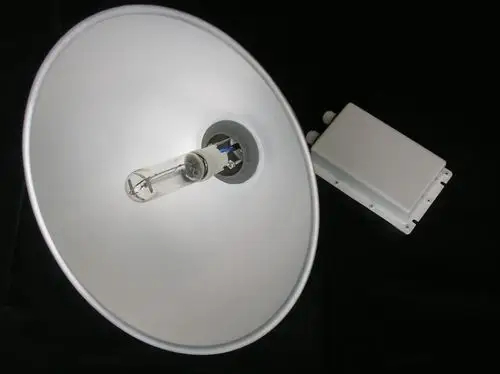
Brightness and Intensity: High - pressure sodium lamps are known for their high - intensity light output. They can produce a very bright light, which is suitable for illuminating large areas from a distance. The beam angle can be adjusted using reflectors or other optical devices to achieve the desired lighting pattern.
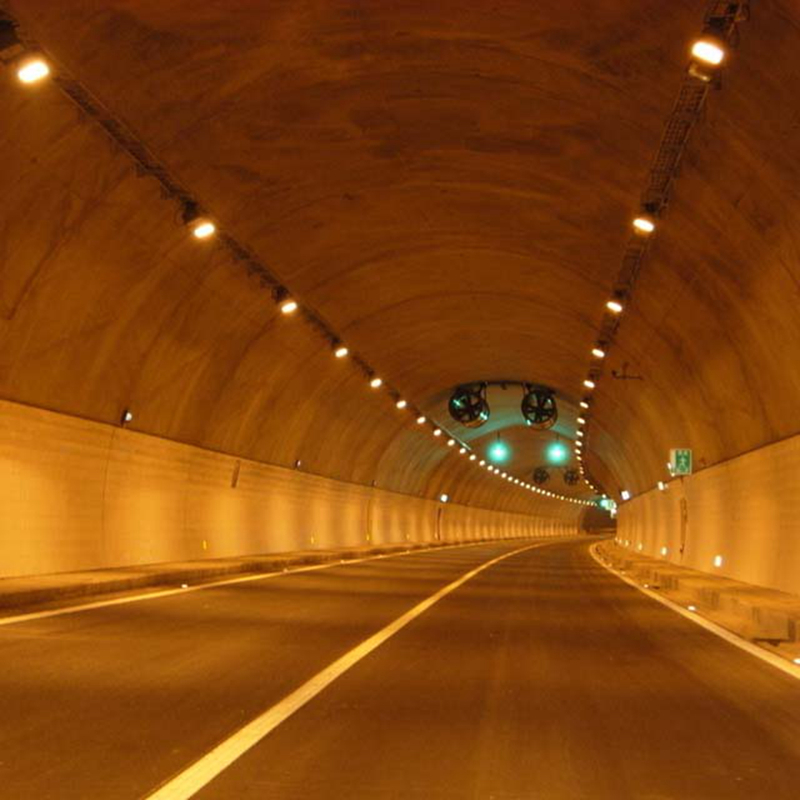
Street Lighting: High - pressure sodium lamps have been widely used for street lighting for decades. Their high - intensity light output and energy - efficiency make them suitable for lighting roads, highways, and city streets. The yellow - orange light can penetrate through fog and other atmospheric conditions better than some other light sources, providing good visibility for drivers and pedestrians.
Industrial Lighting: In industrial settings such as factories, warehouses, and workshops, HPS lamps are used to provide bright illumination for work areas. Their long lifespan and ability to cover large areas with a single lamp make them a practical choice for lighting large - scale industrial operations.
Outdoor Area Lighting: High - pressure sodium lamps are also used for lighting outdoor areas such as parking lots, sports fields, and building exteriors. Their bright light can effectively illuminate these areas, enhancing security and visibility during the night.
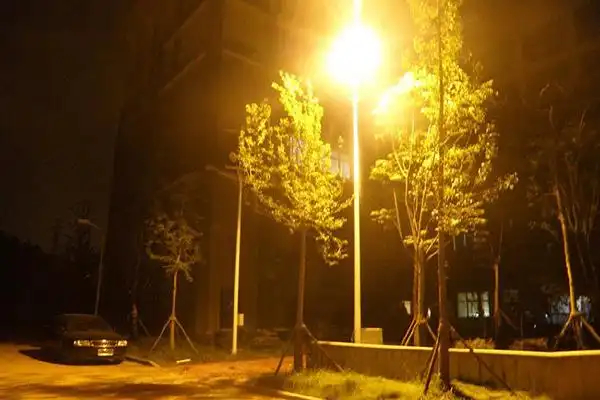
Energy - Efficiency: As mentioned earlier, they are relatively energy - efficient, producing a lot of light for the power consumed. This helps to reduce energy costs in large - scale lighting applications.
Long Lamp Life: Their long lifespan reduces the frequency of lamp replacement, which can be a significant advantage in applications where access to the lamps for replacement is difficult or costly.
Good Visibility in Adverse Conditions: The yellow - orange light of HPS lamps can penetrate through fog, dust, and other particles in the air more effectively than some other light sources.
Poor Color Rendering: The low CRI of high - pressure sodium lamps means that they do not accurately reproduce the colors of objects. This can be a drawback in applications where color discrimination is important, such as in retail stores or art galleries.
Warm - up and Restrike Time: HPS lamps have a warm - up time of a few minutes during which the light output gradually increases and the color stabilizes. Also, if the lamp is turned off and then needs to be turned back on quickly, it may take a longer time (a few minutes) to restrike and reach full brightness.
Spectral Limitations: The light spectrum of HPS lamps is concentrated in the yellow - orange range. This can lead to a less - than - ideal visual environment in some applications where a more balanced or white light is preferred.