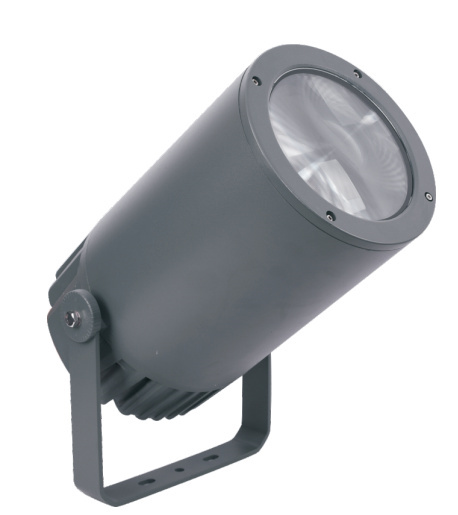
Narrow Beam Floodlight
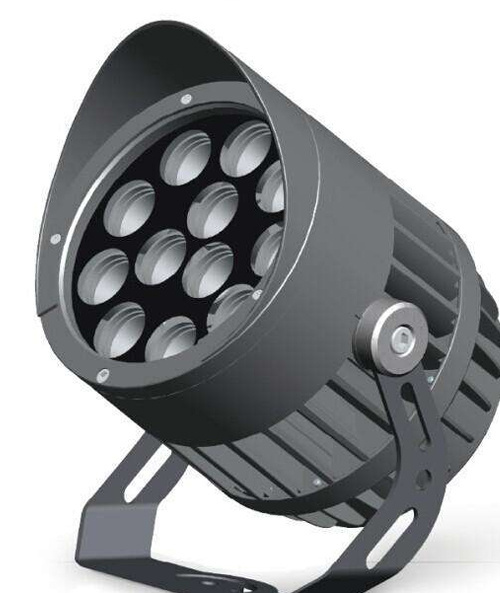
A narrow - beam floodlight is a type of lighting fixture that emits a concentrated beam of light over a relatively small area. The beam angle of a narrow - beam floodlight is typically less than 40 degrees, often ranging from 10 to 30 degrees. Its primary purpose is to provide intense illumination in a specific direction, highlighting particular objects, areas, or features. This makes it suitable for applications such as spotlighting architectural details, illuminating signs, or focusing light on a stage performance.
The light source used in a narrow - beam floodlight can vary. Commonly, it is a high - intensity light - emitting diode (LED). LED technology is favored due to its energy - efficiency, long lifespan, and the ability to produce a bright and focused beam. The LED chips are usually of high quality and are mounted on a well - designed circuit board. Some narrow - beam floodlights may also use other light sources such as halogen or xenon lamps, but LEDs are becoming more prevalent. The color temperature of the light can be adjusted according to the specific application, with options including warm - white for a more inviting atmosphere or cool - white for a more daylight - like effect.
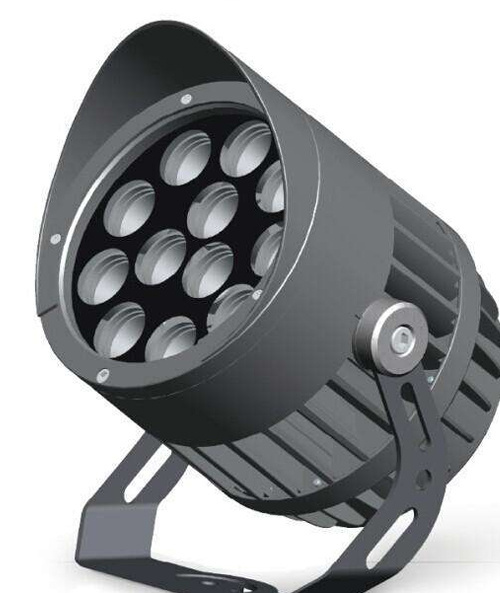
The optical system is a crucial part of a narrow - beam floodlight. It consists of a reflector and a lens. The reflector is usually made of a highly reflective material such as polished aluminum or a specialized reflective coating. Its shape is designed to collect and direct the light from the source into a narrow beam. The curvature and depth of the reflector play a significant role in determining the beam angle and the intensity of the light. The lens, which is often a convex lens, is used to further focus and shape the beam. It can be made of glass or high - quality plastic. The lens helps to reduce the divergence of the light, making the beam more parallel and concentrated.
The housing of a narrow - beam floodlight provides protection to the internal components. It is typically made of durable materials such as die - cast aluminum or high - strength plastic. The housing is designed to be weather - resistant, with features like sealed gaskets to prevent water and dust from entering. It also has a mounting mechanism, which can include a bracket or a flange, allowing the floodlight to be attached to a wall, a pole, or a ceiling. Some housings may have a heat - sink built - into them to dissipate the heat generated by the light source, especially in the case of LED - based floodlights.
For non - battery - operated narrow - beam floodlights, a power supply unit is necessary. If the light source is an LED, an LED driver is used. The driver converts the alternating current (AC) from the mains supply to the direct current (DC) required by the LEDs and regulates the voltage and current to ensure the proper operation of the LEDs. In the case of other light sources like halogen lamps, a transformer may be used to step down the voltage to the appropriate level.
When the narrow - beam floodlight is connected to a power source, the AC voltage is first converted to the appropriate DC voltage (if the light source is an LED, through the LED driver). The regulated power then passes through the light source. For LEDs, electrons in the semiconductor material recombine with holes, releasing energy in the form of photons. The optical system, consisting of the reflector and the lens, then collects and focuses these photons into a narrow - beam pattern. The reflector bounces the light in a specific direction and the lens further narrows and sharpens the beam, allowing it to project a concentrated beam of light over a specific area.
The most significant advantage of a narrow - beam floodlight is its ability to provide highly directional illumination. It can precisely target a specific object or area, making it ideal for highlighting key features such as a work of art in a gallery, a display in a store, or a statue in a park. This focused lighting can draw attention and create a dramatic visual effect.
Narrow - beam floodlights can project light over a relatively long distance with high intensity. This makes them useful for illuminating objects or areas that are far away from the light source. For example, in a stadium, narrow - beam floodlights can be used to light up the scoreboard from a significant distance, ensuring clear visibility for the spectators.
Because the light is concentrated in a narrow beam, there is less spill - over of light into unwanted areas compared to wide - beam floodlights. This can help to minimize light pollution in the surrounding environment, making it more suitable for applications in areas where excessive light spread could be a nuisance, such as in residential neighborhoods or near astronomical observatories.
As the name implies, the narrow - beam floodlight has a limited coverage area. It can only illuminate a small portion of a space at a time. This means that more floodlights may be needed to cover a larger area, increasing the cost and complexity of the lighting setup.
The performance of a narrow - beam floodlight is highly dependent on its alignment. Even a small misalignment can cause the beam to miss the intended target, resulting in ineffective lighting. Therefore, precise installation and adjustment are required to ensure the light beam is directed correctly.
Narrow - beam floodlights are widely used in architectural lighting to accentuate the details of buildings. They can highlight columns, cornices, arches, and other decorative elements, enhancing the visual appeal of the architecture at night. For example, in a historical building, narrow - beam floodlights can be used to showcase the intricate stone carvings on the facade.
In the performing arts, narrow - beam floodlights are essential for stage lighting. They can be used as spotlights to focus on performers, creating a spotlight effect that draws the audience's attention. They are also used to highlight specific set pieces or props on the stage, adding depth and dimension to the performance.
For outdoor signs and billboards, narrow - beam floodlights can provide bright and focused illumination. They ensure that the text and graphics on the signs are clearly visible from a distance, making them an effective advertising tool. The ability to direct the light precisely helps to avoid glare and ensure maximum visibility even in bright daylight or in areas with other light sources.